
2. The arrival of Buddhism in Myanmar
International Theravāda Buddhist Missionary University, Yangon, The Union of Myanmar
Inauguration Ceremony 9, December 1998
Souvenir
A Commemorative Publication
| The Arrival of Buddhism in Myanmar By Dr Khin Maung Nyunt |
|---|
 |
 |
 |
 |
 |
Arrival of Buddhism in Myanmar: Theravāda Buddhism flourishes in Myanmar. But when and how Buddhism came to Myanmar and by who was this Sāsanā brought to Myanmar are the questions which history tries to answer.
There are many legends, oral histories as well as written records such as stone inscriptions, palm leaf inscriptions, folding paper ink writings and court chronicles giving an array of answers to these questions. They all tell us that Buddhism arrived in Myanmar not once but many times. Buddha Sāsanā did not thrive at once and very quickly after the first and second arrivals. It grew off and on. Only after Myanmar received Tipitaka (the three Repositories of Buddhist Scriptures) the growth of Buddha Sāsanā became continuous.
The First Arrival of Buddha Sāsanā
The first arrival of Buddha Sāsanā was associated with the legend of the Shwe Dagon Pagoda. Accordingly, to this legend, Buddhism arrived in Myanmar in the lifetime of the Buddha. In the Mahā Sakarit year 103 (589 BC), on the full moon Day of Kason (May) the Buddha attained Supreme Enlightenment. While the Buddha was in a phalasammāpatti meditation at the foot of Rājāyatana Lin Lun Tree in the Uruvela Forest near the Neranjara River, two merchant brothers Taphussa and Bhallika of Ukkalapa village of Ramanñadesa came to worship the Buddha. The brothers offered the Buddha honey cakes and the Buddha preached the Dhamma to them. At their request the Buddha gave them eight sacred Hairs of His Head as His relics to venerate. On their return home, they enshrined the sacred Hairs in a ceti they built on the hill then called Tampaguta. That ceti is the ceti we now call Shwedagon Pagoda. This legend is mentioned in the Shwedagon stone inscription, set up by King Dhammazedi (AD 1472-1492) of Hanthawaddy Kingdom. You can still see and read the inscribed stones located in the precinct of the Shwedagon Pagoda. Myanmar Buddhists believe that the Shwedagon Pagoda and the stone inscriptions of King Dhammazedi are the historical evidences of the first arrival of Buddha Sāsanā in Myanmar in the lifetime of the Buddha.


 Encased stupas can be seen either due to earthquake or human destruction. This encased stupa also called Pawdawmu Pagoda. There are 52 encased stupas in Bagan ancient city. The unique Shwezigon pagoda is one of them.


The Second Arrival of the Buddha Sāsanā
The evidences of the second arrival of the Buddha Sāsanā in Myanmar are extracted from King Dhammazedi’s Mon Inscription, the Shwedagon Ceti Inscription, Kelasa Taung Inscription at Taung Zun in the Thaton District, Sāsana Lankāra Sadan (Treatise) and Vamsadipani (Treatise). These inscriptions and treatises give the following account;
“In the Mahā Sakarit year 111 (581 BC), in the 8th Vasa of the Buddha, Arahat Mahā Thera Shin Gavampati entreated the Buddha to visit Thaton (Sudhammapura) in the Kingdom of Ramanñadesa. When the Buddha came to that place with His disciples, the people received them with warm welcome and after hearing the Dhamma, the people became Buddhist. To each of the six hermits the Buddha offered a Hair from His Head to worship as His Relic. Thirty-seven years after the above date, the Buddha entered Mahāparinibanna (Demise) and when His remains were cremated, thirty-three unburnt tooth relics of the Buddha were taken away by Mahā Thera Shin Gavampati to Thaton and were given to King Thiri Māthawka. The king enshrined each Tooth Relic in one of the thirty-three cetis he built.
Above the 37 years after of this visit means at the time of Mahā-parinibbāna of Buddha. (111+37= 148 Maha Sakarit).
So these unburnt teeth called relics of Buddha or Buddha’s Swedaw.
In Kalyāṇi stone inscription, it was inscribed that Suvanna Bhumi was situated in the south west of Mt. Kelāsa pagoda in Yamanya Province (Ramanñadesa). It is Bilin, Thaton district, Mon State.
The Third Arrival of the Buddha Sāsanā
In the Mahā Sakarit year 123 (569 BC) in the 20th Vasa of the Buddha, while the Buddha was residing in the Jetavana Vihara in the Kingdom of Savatthi, one Mahā Thera named Mahā Puṇṇa came and requested the Buddha to visit Sunāparanta Vaniccagāma. The Buddha with His 500 disciples came to that place. A monastery built of sandal wood was offered to the Buddha to reside. Nāmantā Naga and his friend Hermit came to pay homage to the Buddha whom they requested to leave some kind of His Representative for them to worship. Thus, the Buddha left two Footprints, one at the foot of the Minbu Hill Range and the other on a little higher up on the hill. These two Buddha’s Footprints have been the sacred objects of veneration for the Buddhists. They are well known far and wide as Shwe Set Taw. On the site of the sandal wood monastery the Buddha had resided during His sojourn, a commemorative ceti was built. It is well known as Kyaung Taw Ya ceti. When the Buddha and His disciples left, Mahā Thera Mahā Puṇṇa remained in Sunāparanta Vaniccagāma to propagate the Buddha Dhamma.


Old Rakhine Chronicles also claim the visit to Rakhine of the Buddha in the 20th of His vāsa. With 500 disciples the Buddha visited Dannyawaddi. The king of Dannyawaddi named Chandasuriya after hearing the teachings of the Buddha became a Buddhist and also the entire people of his kingdom embraced the Buddha Dhamma. The King entreated the Buddha to leave His Replica to venerate. An alloy image in the likeness of the Buddha was cast. This image is well known as Mahā Muni. In the reign of King Bodawpaya (AD 1782-1819) his son Crown Prince brought the Mahā Muni Image to the Capital Amarapura. The Image is now housed in a sumptuous temple at Mandalay. It is the sacred object of veneration to the Buddhists the world over. References to the Buddha’s journey to Sunāparanta Vaniccagāma are found in Puṇṇovāda Sutta, Uparipaṇṇāsa, Majjhima Nikāya, Suttana Piṭaka.

Here is a point to note that three arrivals of the Buddha Sāsanā to Myanmar just described took place during the lifetime of the Buddha. The first arrival took place in the very same year of the Buddha’s Supreme Enlightenment. The two merchant brothers who brought eight sacred Hairs of the Buddha to Myanmar may be regarded as the first Buddhist missionaries. At that time the Sangha Order was not yet founded, so there was no monk missionary at that time. In the second and the third arrivals of the Buddha Sāsanā, we notice that the Buddha Himself led the Dhammaduta (the religious mission) to Myanmar and He Himself preached the Dhamma, thereby converting the kings and the people, and He left His Representatives to venerate such as sacred Hairs, Footprints and Image of His likeness.
Archaeological remains, inscriptional and literary and canonical evidences stand witness to these three arrivals of the Buddha Sāsanā to Myanmar. They are open to historical research and academic investigation.
The Fourth Arrival of the Buddha Sāsanā
The Third Buddhist Synod was held with the patronage and support of Emperor Asoka of Pataliputtara, in the Buddhist Era 235. The Arahats led by Ashin Moggaliputta Tissa attended the Third Buddhist Synod. Foreseeing that the Buddha Sāsanā would spread to the far off places and flourish there, Buddhist missionaries were dispatched to nine countries and nine places.
Emperor Asoka sent his monk son Ashin Mahā Thera Mahinda to Sri Lanka to propagate the Buddha Dhamma. In the Buddhist Era 235, Mahā Theras Sona and Uttara accompanied by Mahā Thera Anuruddha and Mahā Thera Tissagupta and Mahā Thera Soneyya came to Suvannabhumi (Thaton) in Ramanñadesa to carry out missionary work there. The King of Suvannabhumi at that time was Siri Mā. Three Buddha Sāsanā that arrived there during the lifetime of the Buddha, the Buddha Sāsanā that arrived there after Mahāparinibanna of the Buddha and the Buddha Sāsanā that arrived there after the thirty-three sacred Tooth Relics of the Buddha brought by Mahā Thera Gavampati were enshrined in thirty-three Dhatu Cetis.
The people of Suvannabhumi after hearing the Dhamma from Mahā Theras Sona, Uttara and the accompanying Mahā Theras came to know that they were the disciples of the Buddha. Their Mahā Theras instructed the people on moral precepts to observe and practise. After hearing the Dhamma from the Mahā Theras, sixty thousand became Arahats, three thousand and five hundred men and one thousand and five hundred women entered monkshood.
The fifth arrival of the Buddha Sāsanā
In the Buddhist Era 450, Buddhist king of Sri Lanka Vadagamani concerned the fourth Buddhist synod. Maha Thera Dhamma Rukkhita presided the synod and 500 arahats participated in it. Tipitaka were translated into Magadha (Pali) and Atthakatha (commentaries) were rendered into Sri Lankan language. All works were inscribed on palm leaf the first recording in writing of Tipitaka and commentaries.
In the Buddhist Era 930 or AD 386 (circa) during the reign of King Mahānama of Sri Lanka who was a contemporary of King Thily-gyaung of Bagan of Myanmar, Mahā Thera Buddhaghosa who was a native of Ghosa village in the Kingdom of Rājagaha came to Sri Lanka at the invitation of his mentor Mahā Thera Revata. Maha Thera Buddhaghosa resided in Mahā Vihara and he translated into Māgadha, Tipitaka written in Sri Lankan language. He brought to King Dhammapala of Thaton in Ramanñadesa his translated work. That is the fifth arrival of the Buddha Sāsanā in Myanmar in the form of written Tipitaka.
Arrival of written Tipitaka in Tampadipa (Bagan)
Buddha Sāsanā flourished in the Pyu City Kingdoms. Artifacts excavated from the archaeological sites such as Sri Kestra, Beithano and Hanlin show that at that time Māhayana Buddhism co-existed with Theravāda Buddhism. There are figures and statues of Māhayana Buddhist type such as Lokanātha deva (Bodhisatta), Avalokestra and Taya Devi printed on terra cotta votive tablets and stone plaques with carvings of Vishnu and Lashmi devi and three headed and four headed Brahma found among the excavated artifacts. Other places where Buddha Sāsanā flourished were Rakhine Vesali and Ramanñadesa.
Buddha Sāsanā which Bagan first received was of Māhayana type which arrived there by land from the north. It was tinged with Hindu Brahminism. Besides, there were Aries or forest monks who lived a loose or undisciplined life. They practised and propagated a debased form of Buddhism.
When Anawrahta became king in AD 1044, He was intent upon purifying Buddhism which was prevalent at Bagan. In AD 1053 Shin Arahan a Maha Thera from Thaton arrived in Bagan with the noble intention of introducing pure form of Buddhism. It was at the advice of Shin Arahan that King Anawrahta brought to his Capital written Tipitakas, Buddha’s relics and missionary monks from Suvannabhumi in AD 1057.
The arrival of Shin Arahan in Bagan in AD 1053 and the arrival of Tipitakas and missionary monks in AD 1057 are the important events that make turning points in Myanmar religious and cultural history. From these dates onwards Buddhism in pure form of Theravāda Buddhism or Buddhism as preached by learned monk Elders with written Tipitakas from reference has been firmly established in Myanmar and it has been flourishing till today.
The Fifth and the Sixth Buddhist Synods
Since the time of the Buddha’s Mahāparinibanna (Demise) till today there had been held six Buddhist Synods. Of them the last two, the Fifth and the Sixth Synods took place in Myanmar. It was King Mindon (AD 1853-1878) the second last Myanmar King, patron, supporter and promoter of Theravāda Buddhism who held the Fifth Buddhist Synod at his Capital Mandalay in AD 1871. Eighty-three years after the holding of the Fifth Synod, the Sixth Synod was held in Yangon in 1954 in the man-made colossus Cave named Maha Pāsana Grotto. Heads of State, Heads of Government, and eminent monks from Theravāda Buddhist countries worldwide attended the Sixth Synod.
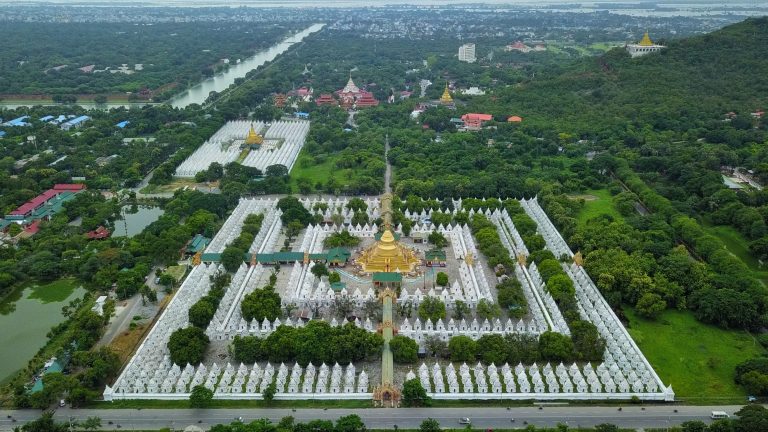
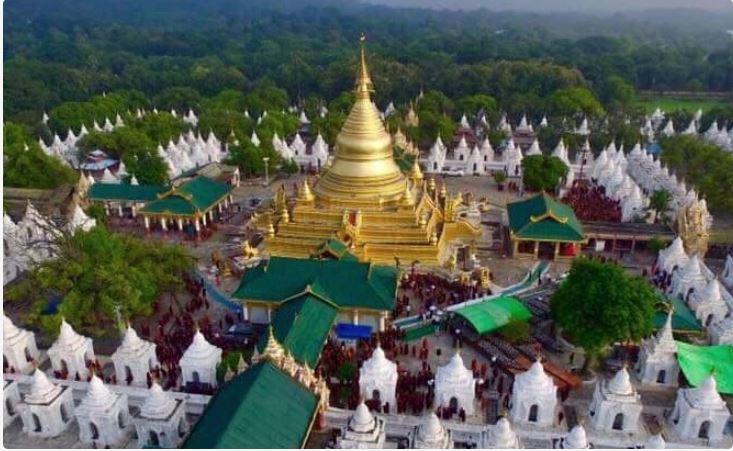
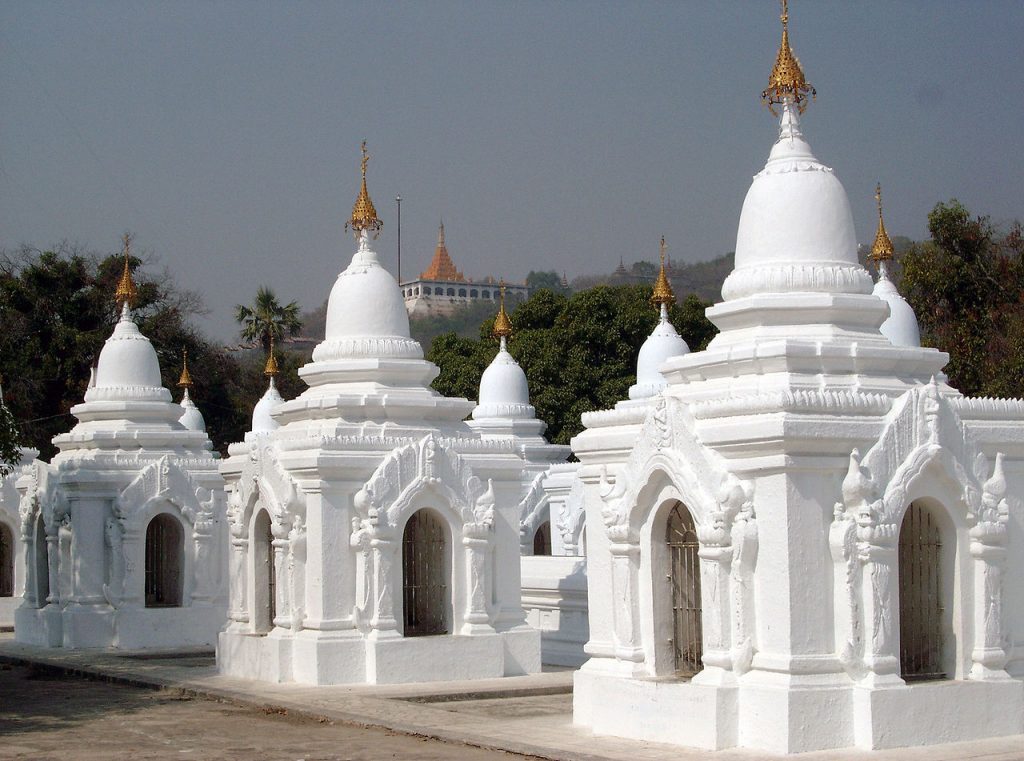
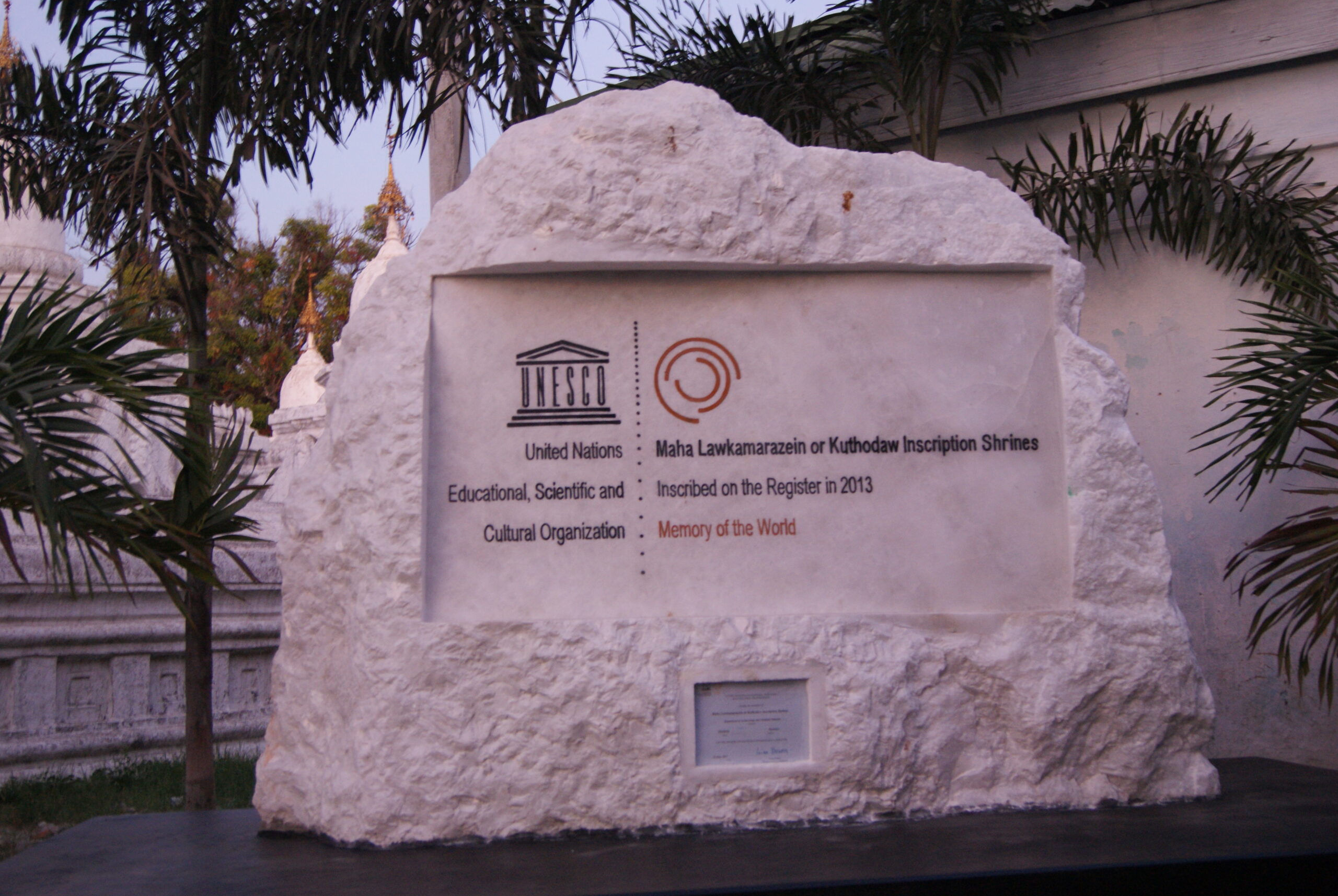
Seven hundred and twenty-nine large marble slabs bearing on both faces inscriptions of Tipitaka, setup in the spacious precincts of Mahā Marasein Pagoda at Mandalay in the reign of King Mindon, and Thiri Mingala Kaba Aye Pagoda, Mahā Pāsana Grotto and all appertaining religious monuments and buildings in Yangon stand till today as the historic monuments of the last two Buddhist Synods held in Myanmar.


Suggested Books
- Arthur Phayre, History of Burma, London, 1883.
- Khin Maung Nyunt (Dr.), Pilgrim’s Guide to Yangon, Bagan, Mandalay and Bago,1991.
- Pe Maung Tin, U, “The Shwe Dagon Pagoda Part. 1, 2, 3”, Journal of Burma Research Society (JBRS), Vol 24, Part 1, 1934. (The stone inscriptions were engraved by order of the Mon King Dhammaceti in the year of Burmese Era (BE) 847 (AD 1485).
- Pe Maung Tin and Luce, G. H (Trans.), The Glass Palace Chronicle of the Kings of Burma, London, Oxford University Press, 1923
- Puṇṇovāda Sutta, Uparipaṇṇāsa, Majjhima Nikāya, Suttana Piṭaka
- Sāsanā Laṅkāra Sādan, Yangon, Hanthawaddy Pitakat Press, 1956
 Users Today : 35
 Total Users : 102612
Above, it mentioned that the Buddha attained enlightenment at Maha 103 and first Sasana arrived to Myanmar at Maha 103.
please explain for this. Thank you!
Please see detail this lecture note including blue boxes. As you know Maha Era or Maha Sakarit 103, Buddha attained omniscience. At that time he met with two merchant brothers and gave them 8 hair relics. They gave the sacred hair relics to king Ukkalapa who enshrined them in the stupa discovered on the summit of Singuttara.
Please see detail about this story in the book name “The Shwedagon Pagoda” written by U Pa Maung Tin,
Vol. xxiv, Part. 1 and 2, Journal of Burma Research Society (JBRS), 1934.
Suggested Books:
1. Pe Maung Tin, U, The Shwe Dagon Pagoda Part1, 2, 3, Journal of Burma Research Society (JBRS), Vol 24, Part 1, 1934. (The stone inscriptions were engraved by order of the Mon King Dhammaceti in the year of Burmese era (BE) 847 (AD 1485).
2. Khin Maung Nyunt (Dr.), Pilgrim’s Guide to Yangon, Bagan, Mandalay and Bago,1991.
3.The glass palace chronicle
If you read many books you will be known so many historical facts.
Thanks for your information Sir!
Maha Sakarit / Maha era and Buddhist era are the same? Sir
Maha Sakarit / Maha era is before the Parinibbāna.
Buddhist era is after Parinibbāna. It is also call Sasana Sakkarāj (or) Year of Religion (or) Anno Buddhae.
For instance: “In 1601, Anno Buddhae, and 419 Sakkarāj, King Anuruddha, the Lord of Arimaddanapura, brought a community of priests together with the Tipitaka (from Rāmaññadesa), and established the Religion in Arimaddanapura, otherwise called Pugāma (Bagan).”
Ref: “Kalyānī Inscriptions erected by King Dhammacetī at Pegu in 1476 AD” Text and Translation by Taw Sein Ko, 1892, p-49.
Besides in the articles and research papers of former Pāli prominent scholars such as U Pe Maung Tin, U Shwe Zan Aung and eminent historian Dr Than Tun did not use the term Buddhist Era. They used Sasana Sakkarāj (or) Year of Religion (or) Anno Buddhae.
BE (Burmese Era) is old use for abbreviation. Now use as Myanmar Era (ME) (or) Myanmar Sakarit.
This year is 1384 ME.
So we should not use abbreviation as BE for Buddhist Era. It will be confused for general readers.
Here it did not mention the exact year for fifth arrival. It just said that he brought translated works to Suvanabhumi later, buddhist year 930. Translation took 1 decade. So can it regarded as buddhist year 940 is fifth arrival of sasana?
Yes. As you see in your lecture note.
These lecture notes are just for academic students not for research paper.
You need to read many reference books.
Thanks for your guidance Sir!!
Here it did not mention the exact year for fifth arrival. It just said that he brought translated works to Suvanabhumi later, buddhist year 930. Translation took 1 decade. So can it regarded as buddhist year 940 is fifth arrival of sasana?
The same question.
One more question is that he brought his translated works to King Dhammapaja of Suvanabhumi. Does the word “he” mention to Buddhaghosa? Does it mean Buddhaghosa was the one who brought fifth sasana to Myanmar?
Yes. You can read detail about that event in those books “The Teaching of the Buddha (Basic Level to Higher Level) and How to live as a Good Buddhist which was published by the Department for the Promotion and Propagation of the Sāsanā.
These lecture notes are just for academic candidates not for research paper.
Thanks Sir! I will read the books you mentioned.
According to the history of third arrival of Buddha Sasha , Buddha images or statues appeared at the lifetime of the Buddha. But some historians say “ Buddha images appeared in the 1st century AD given Gandharan statues. So in that case, how do you think?
Good question!
As you know it is extract from Rakhine Chronicle. It mentioned about the Mahamyatmuni Image.
According to historians the cult of Buddha statue appeared after over the 400 years of Parinibbāna of Buddha.
Mahayana Buddhist sculptures – better known as Gandhara art developed during 1-5 Centuries AD. It is a mix of Hellenic and Indian influences. It is also known as Greco-Buddhist Art (Hellenistic Art).
This art introduced Buddha’s image and the iconography which was developed influenced Buddhist religious art across the world.
I will demonstrate with visual aids presentation about Gandhara art and Hellenistic Art today lecture time.
Dear Dr. Tint,
Thank you for a compact, but informative introduction on the arrival of Buddhism to Myanmar. It was a good read.
However, as a reader and relatively new to Myanmar history, it would be help me as a reader if you would show maps along with years when these events happen, because many of these locations are very difficult to picture without visual aid; of course one could look into a map from Google, but it would be difficult to find maps depicting those mentioned periods.
Thank you very much nonetheless for a nice article.
Sorry for late reply. I couldn’t check my hosting server during previous days. Please see the reference books in your hand out. I will try to show these maps.
Dear Dr. Tint,
I would additionally like to ask two questions based on the article.
Firstly, why didi Buddha gave his hair to the travelling merchants and other people as well? What purpose do these relics actually have for Buddhist in general othern than to revere and have some historical relics.
Secondly and finally what purpose do stupas actually play in Buddhism and to what tradition they initially belonged to before they attained such a significant role.
These lecture notes are just for diploma candidates not for research paper.
Please see detail about this story in the suggested books.
You can read detail about that event in many books which were published by the Department for the Promotion and Propagation of the Sāsanā.
If you read many books, you will be known so many historical facts.